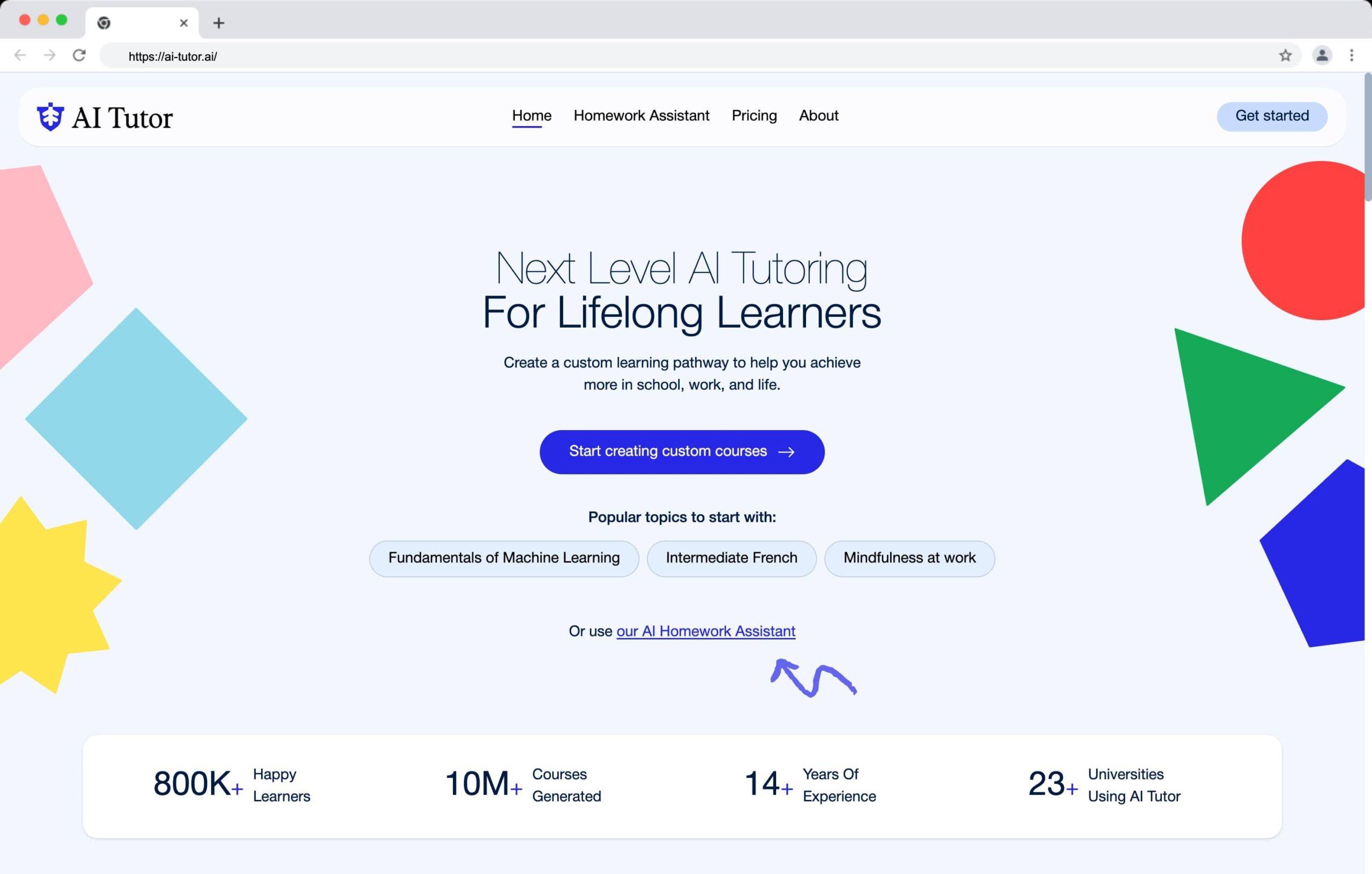
When I first dived into the world of AI in education, I was still a bit sceptical about it making a difference.
We’re all so used to the traditional learning model: a classroom, a teacher, a set curriculum.
But the more I dug into what’s happening with AI in learning and development – especially in tutoring – the more I was convinced: this is more than just a trend, it’s a full on shift in how people learn, train and grow. Not just in school, not just at work, but anywhere in between.
I’m going to break down exactly how AI is turning learning and development on its head – through the eyes of tutoring tools.
I’ll cover how it works, the tech behind it, why companies and schools are adopting it, and how it’s impacting real users.
Expect to see some pretty specific examples, bullet points and real-world results – not just theory.
What is AI in Learning and Development?
Time to get to the basics.
AI in learning and development is all about using artificial intelligence to make learning better – that means making it easier for people to pick up new skills and knowledge, and for them to retain it.
It’s everything from creating a personalized learning path to getting automated tutors to give you instant feedback.
In tutoring, AI is being used to:
- Work out how you learn best
- Deliver content that’s tailored to your strengths and weaknesses
- Give you the answers in real-time
- Keep track of your progress
- Adjust the lessons on the fly
It’s not sci-fi anymore – this is real, and it’s happening right now in schools, corporate training and self-paced learning platforms.
Key Technologies Behind AI Tutoring
Here are the main AI technologies that make this all possible:
| Technology | What It Does | Used In |
| Natural Language Processing (NLP) | Understands and responds to student questions | Chatbots, writing tutors, reading comprehension |
| Machine Learning | Analyzes learning patterns to adjust content | Adaptive learning platforms |
| Predictive Analytics | Flags where learners may struggle next | Employee upskilling programs |
| Speech Recognition | Converts spoken input into actions | Voice-based tutoring, language apps |
| Computer Vision | Tracks engagement and focus using webcams | Proctoring, interactive learning environments |
It all adds up to tutoring that’s more responsive, more personalized and a heck of a lot more scalable than any one-on-one human model.
Personalised Learning Paths That Change On The Fly
This is the first thing that really stood out to me with AI tutoring: it customises learning to the individual.
It breaks up a student’s learning into little chunks and rearranges them based on how that person learns best.
How it works:
- The AI tracks how quickly you get through tasks
- It looks at what you struggle with, where you get stuck and what concepts you rush through
- Then it re-shuffles the next lesson – maybe by slowing it down, switching up the format or even going back over old material.
This is a game-changer for learners who struggle in traditional classroom settings. And it’s also great for advanced learners who get bored with being held back.
Benefits of real-time personalization:
- Better retention because the material is taught at the right pace
- Higher engagement because the content feels relevant
- Faster progress because there’s no time wasted on things you’re already good at
This is now the norm in platforms like Khan Academy (with Khanmigo), Duolingo and even corporate training platforms like Coursera for Business.
Real-Time Feedback That Makes All The Difference
Traditional tutoring can take days or more for a teacher to get back to you with comments. With AI, feedback is instant.
When I used tools like Grammarly or ChatGPT for writing assistance, the difference was night and day. I could correct my mistakes straight away, understand what I did wrong and keep going without delay.
Types of feedback AI provides:
- Spelling and grammar corrections
- Explaining the concept behind your mistakes
- Instant quiz grading
- Suggesting a better writing tone
- Giving you hints on how to improve a response
A Table: Human vs. AI Feedback
| Feature | Human Tutor | AI Tutor |
| Speed | Hours to days | Instant |
| Availability | Scheduled sessions | 24/7 |
| Scalability | Limited by hours | Unlimited users |
| Personalization | Varies by skill | Consistently tailored |
| Cost (per hour) | $30 to $100+ | Typically under $10 |
Feedback is one of the most powerful tools in learning. And when AI gives it to you right when you need it, the results are so much better.
Skill Gap Analysis for Corporate Training
AI tutoring isn’t just for schools or students. It’s a major asset in workplace learning.
Companies like Accenture and IBM are using AI-powered L&D systems to track skill gaps in thousands of employees.
That means they can see – in real-time – what skills are missing, what needs to be taught, and how to teach it.
Some real-life examples:
- An employee struggles with sales demos? The system picks up on it and assigns a simulation-based training.* A new employee struggles with Excel skills, the AI recommends bite-sized modules that focus just on the essentials they need to get up to speed.
- A team is having trouble delivering on client calls and the AI flags up the need for some soft skills training.
These systems work away quietly behind the scenes, constantly learning and adjusting as new data comes in every day.
The benefits for organisations:
- Less wasted time on training that doesn’t actually need to happen
- Measurable improvements in team performance, that you can actually see
- Scalable learning – so your global teams can learn whenever, wherever
AI can even help cut down on L&D costs, by the way. A McKinsey study showed that Accenture were able to chop their training expenses by 40% using AI based tools.
Continuous, On-Demand Learning for Everyone
We live in a world where we’re always on, and AI tutoring fits right in with that.
Whether you’re a student working late into the night or a manager who just needs to brush up on a concept during lunch, AI tutors are available 24/7. No need to schedule anything, no need to wait around, no stress.
Some real world examples:
- A student could take a snap of a maths problem at midnight and get a step-by-step explanation from an AI tutor.
- A business analyst could be stuck on a plane and ask an AI coach to help with structuring a report.
- A language learner could even practice speaking with an AI voice tutor in any language – no problem.
This kind of flexibility really does make learning more accessible. It especially helps people in rural areas, remote jobs, or those with super busy lives.
The top platforms offering 24/7 AI tutoring:
| Platform | Focus Area | Monthly Cost (Approx.) |
|---|---|---|
| TutorAI.me | General tutoring across subjects | Varies (Free plan available) |
| Khan Academy | K-12 subjects | Free |
| Duolingo Max | Language learning | $14.99 |
| ChatGPT Plus | General tutoring | $20 |
| Grammarly Premium | Writing and grammar | $30 |
| Coursera | Career & business skills | $59 |
AI Tutoring Improves Accessibility and Inclusion
One of the things that really stands out to me about AI is how it can make learning more accessible to more people.
Traditionally, you’d need a physical space, transportation and a bit of flexibility in the scheduling – none of which is easy to come by. But AI tutoring lets you do it all with just a phone and internet connection.
How AI tutors make a difference:
- Built in language translation so learners can understand instructions in their own language
- Text-to-speech and speech-to-text tools so learners can follow along easily
- Visual aids to help learners with dyslexia or ADHD
- Multilingual content generated so there are no language barriers
In corporate training, this means that teams can get access to the same high-quality instruction – no matter where in the world they are based or what languages they speak.
And it also means that employees with disabilities have fewer barriers to overcome.
Real Case Studies of AI in Learning and Development
The impact of AI tutoring isn’t just some theory – it’s backed up by real world data.
Here are a few case studies I’ve come across that I think are pretty useful:
Case Study 1: Khan Academy’s Khanmigo
- Result: Students using Khanmigo were 2 times more likely to complete lessons than students who didn’t
- How: The AI tutor gave real time suggestions, hints and encouragement, which kept learners from dropping out
- Cost: Free for students through some pilot programs
Case Study 2: IBM’s Reskilling Initiative
- Number of employees: Over 300,000
- Goal: Reskill workers for new AI and cybersecurity roles
- Result: Training time was cut by 30%, and employee confidence improved by 25
- Savings: Estimated at $200 million over 3 years
Case Study 3: Duolingo’s GPT-Powered Feedback
- Tool: Duolingo Max (uses GPT-4)
- Result: User engagement went up by 50%
- How: AI provides detailed explanations and role-play simulations in many languages
Challenges and Limitations to Consider
As much as I’m a fan of AI tutoring, there are definitely some challenges to consider.
Some of these are limitations, some are real concerns – and what I’ve seen and what other users have reported is:
Some of the limitations we should be aware of:
- Bias in data: If the AI has been trained on biased content then the tutor will be biased as well
- Privacy concerns: There’s a lot of sensitive learning data being collected here – users need to know how it’s stored and used
- Over-reliance: Some learners may get too used to the instant answers and lose the ability to think for themselves
- Lack of human empathy: AI can simulate empathy, but it’s not the same as a real person who truly gets it
As with any technology, it’s all about balance. AI tutors are tools – not replacements for teachers or mentors. They work best when used alongside human guidance.
The Future of AI in Learning and Development
Looking ahead, I think AI tutoring is going to become the norm – not the exception.
We’re already seeing early stage tools like ChatGPT and Khanmigo get adopted by schools, companies and even government agencies. And as the tech improves, tutoring will start to feel even more like a real conversation – more responsive, more personal.
What I expect to see next:
- More voice based tutors that feel like a real conversation* Emotion-aware systems that adjust their tone to match the frustration or confusion that learners are feeling
- Tight integration with popular job platforms such as LinkedIn and Slack – so that people can get access to just-in-time training exactly when they need it
- AI tutors that have been specifically trained for really specific industries – such as healthcare, finance, or law
There’s still loads to do before we get to where we want to be.
But if you happen to be in the business of building or using an AI tutoring platform, now is a pretty good time to start putting some serious thought into making it smarter, more considerate of the learner, and overall a lot more useful to people of all sorts of learning styles.
Final Thoughts
AI and learning and development isn’t just some passing fad anymore – its here, and its having a major impact on the way people learn and grow.
I’ve had the chance to use it, test it out, and personally see the results for myself.
Whether you’re either building a tutoring platform from the ground up, trying to manage employee training in a company, or just simply trying to learn something new faster, AI tutors can really help you get there sooner, more cheaply, and overall more effectively.
The tools may still be evolving, but its pretty clear to see where things are headed.
The idea of personalized, AI powered tutoring is becoming a major part of how people develop their skills – whether that’s in school, on the job, or just in life in general.